
In-Line Labeling Machine
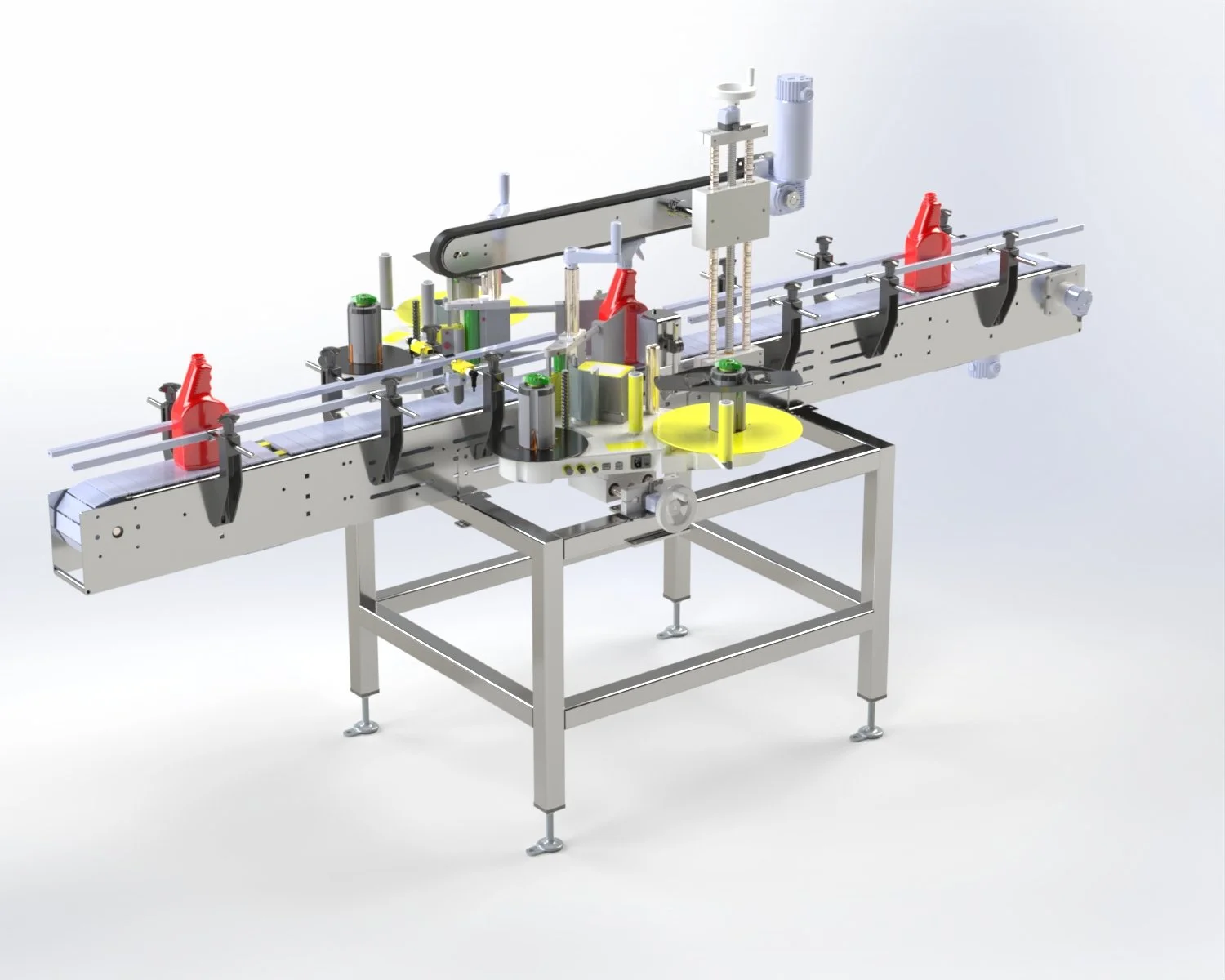
The AB Technology’s NEW In-Line Label Machine applies pressure-sensitive/self-adhesive labels to bottles, cans, and containers. Built on AB Technology’s modular frame architecture with a stainless-steel conveyor, it delivers reliable application for full wrap, partial wrap, front/back, and top/bottom labeling—while fitting cleanly into new or existing Excelis lines.
Key Benefits:
Versatile Formats: Round and non-round containers; full/partial wrap, front/back, top/bottom.
Serviceability: Standardized AB Technology frame/components simplify maintenance and spares.
Proven Accuracy: Roxi applicator with self-learning optimization for repeatable placement.
Scale with You: Entry-level manual DC speed control; engineered for recipe-based automation upgrades.
Seamlessly integrates with SureKap, and Volumetric Technologies for a complete packaging solution.
In-Line Labeler provides:
Proven Applicator: High-end, self-learning, programmable Roxi controls
Versatile Container Handling: Belt + friction plate assembly to rotate bottles for consistent wrap accuracy.
Modular Frame Architecture: Precision aluminum extruded profile frame shared across AB platforms.
Rugged Conveyor: Stainless-steel chain conveyor; configurable Left→Right or Right→Left product flow.
Intuitive Controls: Manual DC motor speed adjustment (entry-level automation).
PROVEN APPLICATIONS: FOOD & BEVERAGE, PERSONAL CARE, NUTRACEUTICALS, HOUSEHOLD CHEMICAL, SPECIALTY/SHORT-RUN PACKAGING, AND MORE.
In-Line Labeler LIVE at 2025 Pack Expo with Volumetric Technologies Filler and SureKap Capper. Utilize entire line or just the In-Line Labeler today.
Frequently Asked Questions
Still have questions? Take a look at the FAQ or reach out anytime.
-
An in-line pressure-sensitive labeling machine applies self-adhesive labels to containers as they move continuously through a production line.
The AB Technology In-Line Labeler is designed for round and non-round containers and can be configured for full-wrap, partial-wrap, front-and-back, and top-and-bottom labeling applications. It is built to integrate into new or existing packaging lines without requiring a separate off-line labeling process.
-
The In-Line Labeler is designed for round and non-round containers up to approximately 6 inches in diameter.
Applications may include bottles, cans, jars, and other rigid containers used in food and beverage, personal care, nutraceutical, household chemical, specialty, and short-run packaging operations.
-
The AB Technology In-Line Labeler applies pressure-sensitive, self-adhesive labels.
Depending on the machine configuration, it can support:
Full-wrap labels
Partial-wrap labels
Front-and-back labels
Top labels
Bottom labels
This gives manufacturers flexibility when different products or SKUs require different label positions.
-
Yes.
For round-container applications, the system can use a belt and friction-plate assembly to rotate the container as the label is applied. This helps maintain consistent wrap positioning and repeatable label application as containers move through the line.
-
Yes.
The AB Technology In-Line Labeler can be configured for non-round containers, including applications that require front-and-back labeling.
Machine setup, guides, and handling components are selected around the actual container geometry and required label placement.
-
The system uses a programmable Roxi label applicator with self-learning optimization to support repeatable label placement.
Actual labeling performance depends on several factors, including container geometry, label material, adhesive characteristics, product handling, and upstream and downstream line conditions.
-
The published labeling speed is up to 1,188 inches per minute, depending on the application.
Actual production speed is determined by factors such as container size, label dimensions, required label placement, conveyor speed, spacing between containers, and overall line conditions.
-
Yes.
The machine is designed for integration into both new and existing packaging lines. Its modular frame architecture and configurable conveyor direction make it adaptable to a range of production layouts.
Product flow can be configured from left to right or right to left depending on the plant layout.
-
AB Technology uses a standardized modular frame and component approach across its equipment platform.
For maintenance teams, this can simplify access to machine components, replacement parts, service procedures, and future system modifications. The open frame also helps technicians see and reach the areas they need to inspect or adjust.
-
The machine is designed around straightforward operation and accessibility.
The entry-level configuration uses manual DC motor speed adjustment, while the overall layout is intended to make label changes, adjustments, and routine operation easier for production personnel.
-
Ergonomics matter because label changes, adjustments, and troubleshooting often require frequent operator interaction.
The AB Technology In-Line Labeler uses a modular, open design intended to improve access to the labeling area and simplify roll changes and adjustments. Easier access can reduce unnecessary reaching, awkward machine interaction, and time spent making routine changes.
AB Technology specifically positions ergonomic design as a way to improve ease of labeling and reduce production downtime.
-
Yes.
Top-and-bottom labeling is available as a machine configuration or upgrade option. This allows manufacturers to apply labels to more than one surface of the container as part of the same production process.
-
Yes.
The In-Line Labeler has an upgrade path to PLC and HMI-based controls with stored recipes for machine speeds, label placement, and container formats.
This can be useful for facilities running multiple SKUs because operators can recall established settings rather than manually recreating every adjustment during a product change.
-
Yes.
The modular architecture is intended to provide flexibility across different container formats and labeling requirements.
The exact range of products that can run on one machine depends on the differences between container sizes, shapes, label positions, and handling requirements. AB Technology evaluates those variables when configuring the system.
-
Reliable high-speed labeling depends on more than the label applicator itself.
Important factors include:
Consistent container spacing
Stable container handling
Container shape and rigidity
Label material
Adhesive characteristics
Label dimensions
Required label position
Conveyor speed
Upstream product flow
Downstream line conditions
The goal is to keep the container controlled as it reaches the label applicator so the label is applied in the same position cycle after cycle.
-
Yes.
The In-Line Labeler is designed to fit into broader packaging systems and can integrate with filling, capping, and other packaging equipment.
As part of the Excelis family of companies, AB Technology can support integrated packaging solutions that combine labeling with other production operations.
-
A useful starting point includes:
Container type
Container dimensions
Round or non-round geometry
Container samples or drawings
Label dimensions
Label material and adhesive
Desired label position
Full-wrap, partial-wrap, front/back, or top/bottom requirements
Required containers per minute
Conveyor direction
Existing upstream equipment
Existing downstream equipment
Available floor space
Number of SKUs
Changeover requirements
Control requirements
Operator and ergonomic considerations
These details help determine the correct applicator, container handling method, conveyor configuration, guides, controls, and machine layout.
-
The In-Line Labeler is built around a combination of modularity, repeatable label placement, accessibility, and integration flexibility.
Its standardized machine architecture, programmable label applicator, rugged conveyor, configurable product flow, and upgrade path allow manufacturers to start with the level of automation they need while retaining flexibility for future production requirements.
For engineers and plant managers, the focus is practical: reliable container handling, consistent labeling, easier operator access, straightforward serviceability, and a machine that can fit into the larger packaging process.